The pattern repeats across the market. A genuine luxury property is briefed in a meeting, the budget is improvised against the construction line, and the campaign that follows arrives expensive and undistinguished. The work that should have happened upstream never gets named, and the asset carries the cost. The five steps below are the alternative, in the order the decisions need to be made. Read them with your coffee. The recap sits at the end.
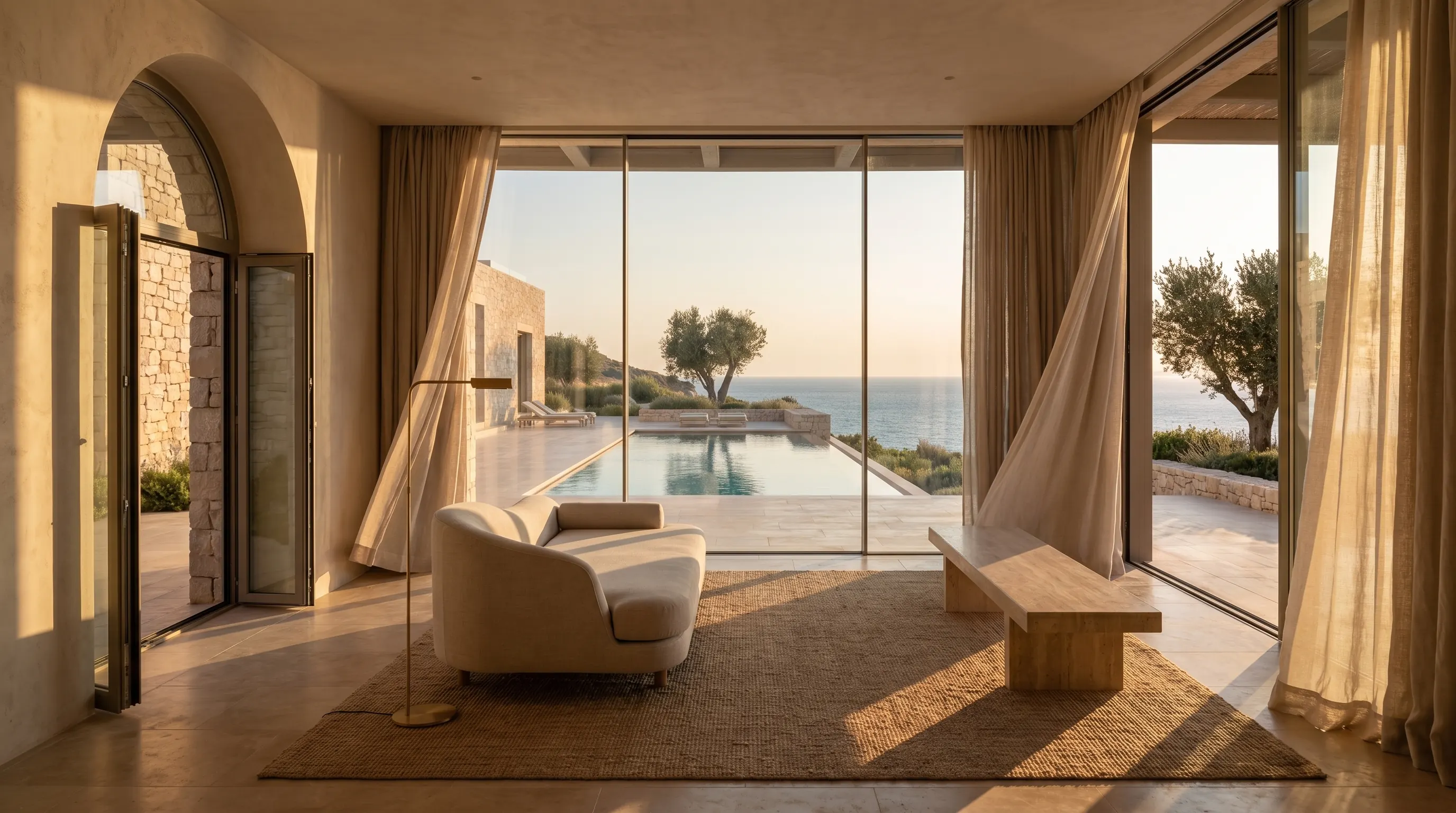
Recognise what you have
The single most expensive decision in luxury real estate marketing is not which channel to use or how much to spend. It is the question every campaign should answer before anything else is briefed. Are we marketing a single asset, or are we marketing a portfolio. The two playbooks diverge from the moment that answer is fixed, and from then on every other choice follows from it.
A single villa run through a portfolio system gets stripped of the identity that made it worth marketing in the first place. A portfolio run villa by villa fragments into a procession of one-offs while the company brand dissolves underneath them. The website, the production stack, the distribution plan, the writing tone, the way a campaign opens and the way it closes, all of them inherit their logic from that initial answer. The cost of confusing the two rarely shows up on a balance sheet, but it shows up everywhere in the work, and it compounds.
The single asset playbook
A property that sits in the luxury tier earns, by virtue of what it is, a strategy designed around it specifically. The high-net-worth buyer at this tier is rarely browsing in the conventional sense. They are making a decision they will live with for twenty years, often longer, and the marketing has to argue for that decision rather than simply list the asset.
From that premise two commitments follow, and they need to hold in parallel because either one without the other reads as half-finished.
A brand of its own.
A specific name with intention behind it, a designer-led identity built for the asset rather than recycled from the company template, a dedicated website that exists for this property alone, and a full production stack matched to the architectural language of the place.
A campaign line item.
The budget is treated as a project line item rather than a marketing afterthought, sized to the property and calculated alongside construction, never against it.
-
The marketing gap
- Most
- luxury listings still ship as little more than a portal upload, with no real marketing campaign behind them.
- Faster
- a listing with professional photography and a real campaign moves faster than a portal upload, and the gap only widens at the luxury tier, per NAR research.
- 5–15%
- of broker commission, reinvested into marketing, is what separates the firms that outperform from the firms that wait.
When the budget is smaller
Not every project commands a launch budget, and that constraint is itself a useful design brief. The discipline when capital is tight is to hold the positioning and trade the reach, which is harder than it sounds because the temptation is always to do the inverse.
Three things still have to be true. The property has to live on a page of its own, not buried inside a portal listing where it competes with everything that does not deserve to be next to it. The photography has to be commissioned properly, in one well-directed pass, so the imagery carries the campaign even when there is no paid campaign behind it. And there has to be a short film, restrained, cut to the cadence of the property rather than to the conventions of a YouTube preroll.
What gets dropped from the playbook in this scenario is the paid distribution layer. The reach the property loses through that cut is recovered through personal distribution instead, through PR placements, conference appearances, broker network introductions, and the conversations that already happen in the rooms where the buyer is sitting anyway.
The portfolio playbook
When the asset is a portfolio rather than a single property, the entire logic inverts and the work begins upstream of the marketing itself, with the buyer. The first move is to segment by intent, because lifestyle buyers, investment buyers, family residence buyers, branded residence buyers, and second home buyers all live in different rooms of the same market and respond to different arguments.
Once the segments are named, the production stack can be consolidated under one trusted marketing team rather than scattered across vendors, which keeps the brand voice consistent across what may be twenty or thirty assets in the same year. The principle to hold from there is simple in the saying and difficult in the practice. The brand identity belongs to the company and stays constant. The asset identity belongs to each property and varies as the property demands.
A property at this tier is not sold. It is recognised. The work of the campaign is to be there when recognition arrives.
Apostolos Lemonis Co-founder & CEO
Distribution at the portfolio level operates on a timeline measured in years rather than campaigns. Social media presence carries the day-to-day weight, YouTube property tours do the longer-form recognition work, off-market introductions move the assets that should not appear in a public listing at all, and the conference rooms where fund managers and family offices meet do the closing.
Why the investment compounds
The argument so far has been about a single project, but the case for taking marketing seriously at this tier only really lands when you look at what it leaves behind. A serious campaign does not just sell the property, it draws into the company's orbit the kind of buyer who returns.
Some of them buy this villa, and those conversions justify the campaign on a project basis alone. Most of them do not, and that is the part the budget conversation tends to miss. The buyers who do not convert this time stay reachable, on the list, in the network, on the invitation list to the next opening, and the relationships the campaign built keep paying out across the next ten projects rather than expiring with this one. Days on market drop in step, because the next property launches into a warm audience instead of a cold one. That is the compounding logic of luxury real estate marketing at this tier, and it is the reason a campaign that looks expensive on a single project line tends to look, three years later, like one of the highest-yielding decisions the company made.
The framework is not a checklist. It is a single upstream decision, followed by a process, followed by a compounding return. Calculate the marketing budget alongside the construction budget, treat it as the asset multiplier it is, and the return shows up across the portfolio rather than at a single closing table.